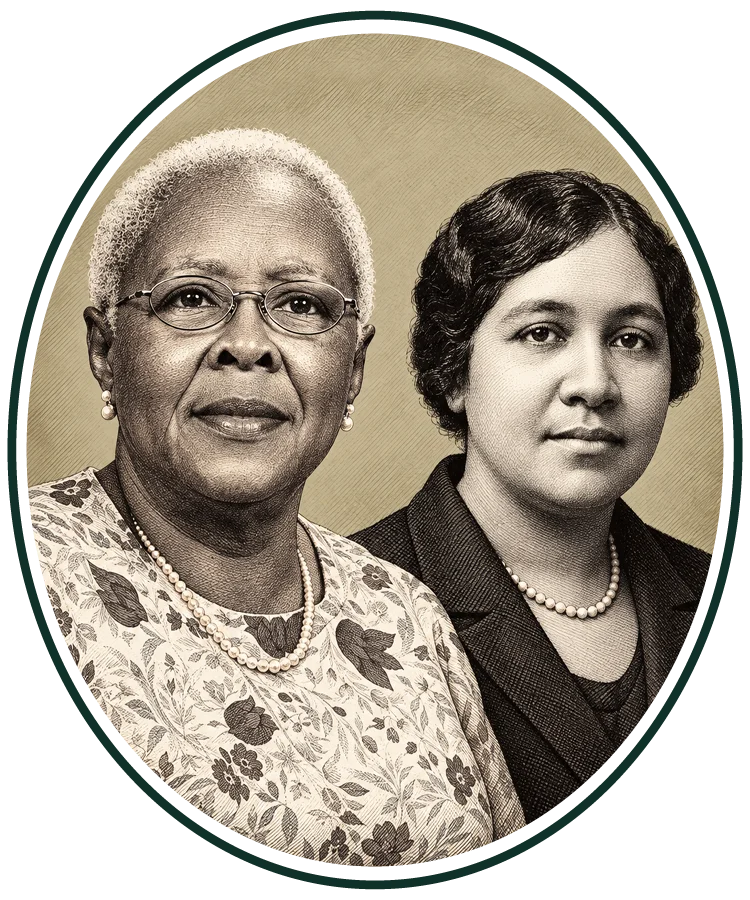
They saved history from disappearing.
Ida Mae Rhodes and Sadie Samuels were Cincinnati educators whose commitment to opportunity extended beyond the classroom. Through teaching, community leadership, and historical preservation, they helped support future generations while protecting an important part of the city’s past.
Both women graduated from the University of Cincinnati. Rhodes served as president of the university’s first Black sorority and began teaching at the Frederick Douglass School in Walnut Hills in 1922.
She founded the school’s alumni association, encouraging students to complete high school and pursue higher education. The association also provided college scholarships.
Samuels taught at the Douglass Colony School and the Harriet Beecher Stowe School. Like Rhodes, she understood education as a foundation for opportunity and community involvement.
Samuels carried that commitment into civic leadership. She served on the boards of the Negro Civic Welfare Association and the Better Housing League and later joined the Mayor’s Friendly Relations Committee.
Her work addressed interracial relationships, housing, and employment. During the 1940s, she also served as vice president of Cincinnati’s NAACP chapter.
Rhodes continued supporting students and strengthening community connections through education. In 1992, the Cincinnati Human Relations Commission recognized her contributions with the Ethelrie Harper Award.
In the early 1940s, Rhodes and Samuels helped preserve the Harriet Beecher Stowe House in Walnut Hills when the building faced demolition.
The house connected several chapters of Cincinnati history. It had been home to the family of Lyman Beecher, Stowe’s father and a leader of Lane Seminary. Later, it became the Edgemont Inn, a boarding house listed in The Negro Motorist Green Book as a place welcoming Black travelers.
Both women raised funds and contributed their own money to help purchase the property. They continued organizing support for the building’s renovation and the restoration of its grounds.
Their efforts helped protect a place where stories of education, abolition, and Black travel could continue to be explored.