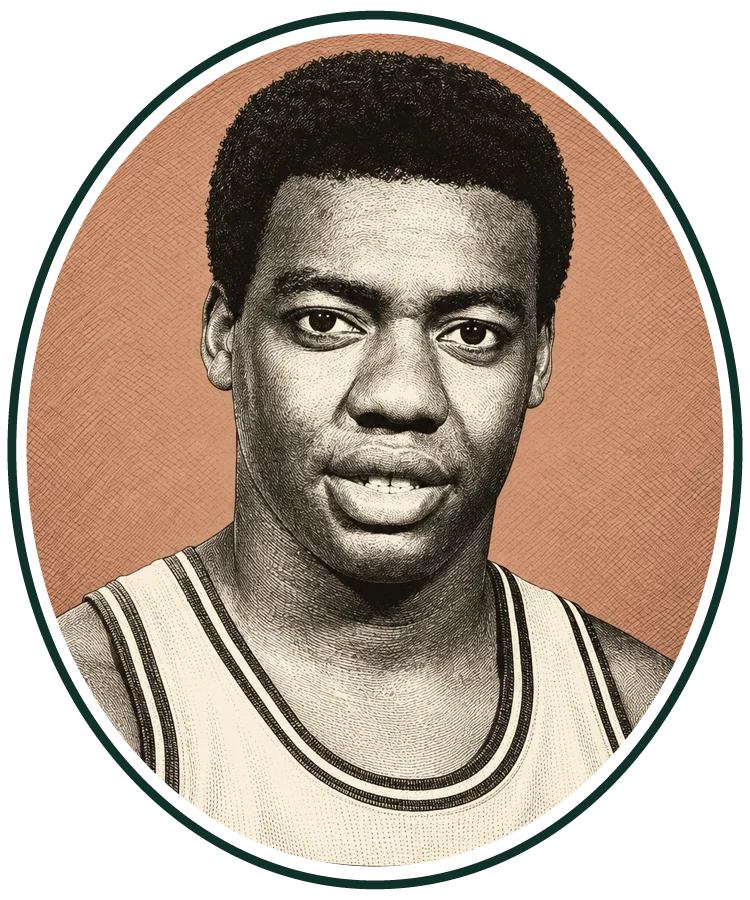
He changed the game beyond the court.
Oscar Robertson’s influence reaches beyond basketball records and championships. From the University of Cincinnati to the Cincinnati Royals, he built a remarkable playing career while helping athletes gain greater control over their work and futures.
Born in Charlotte, Tennessee, in 1938, Robertson grew up in Indianapolis and attended Crispus Attucks High School, an all-Black school.
At the University of Cincinnati, he became the fifth Black basketball player in the university’s history and led the Bearcats to two Final Four appearances.
In 1960, he began his professional career with the Cincinnati Royals. He played in Cincinnati for a decade before joining the Milwaukee Bucks, where he finished his NBA career in 1974.

Robertson became a leader in the National Basketball Players Association, serving as its president from 1965 to 1974.
In 1970, he became the lead plaintiff in an antitrust lawsuit challenging restrictions on professional basketball players’ movement and employment. The eventual settlement helped advance free agency, giving players greater freedom to shape their careers.
His advocacy also extended to college athletics. He challenged the NCAA’s use of former student-athletes’ images without compensation, continuing his work for athletes’ rights beyond his playing years.
Robertson’s commitment to others also took a deeply personal form: he donated a kidney to his daughter.
His philanthropy and health advocacy have included efforts related to kidney disease and organ donation. He has also supported University of Cincinnati students through scholarships.
In 2011, the Cincinnati USA Regional Chamber honored him as a Great Living Cincinnatian. His story connects athletic achievement with lasting contributions to labor rights, education, and health.