They made art as a form of resistance.
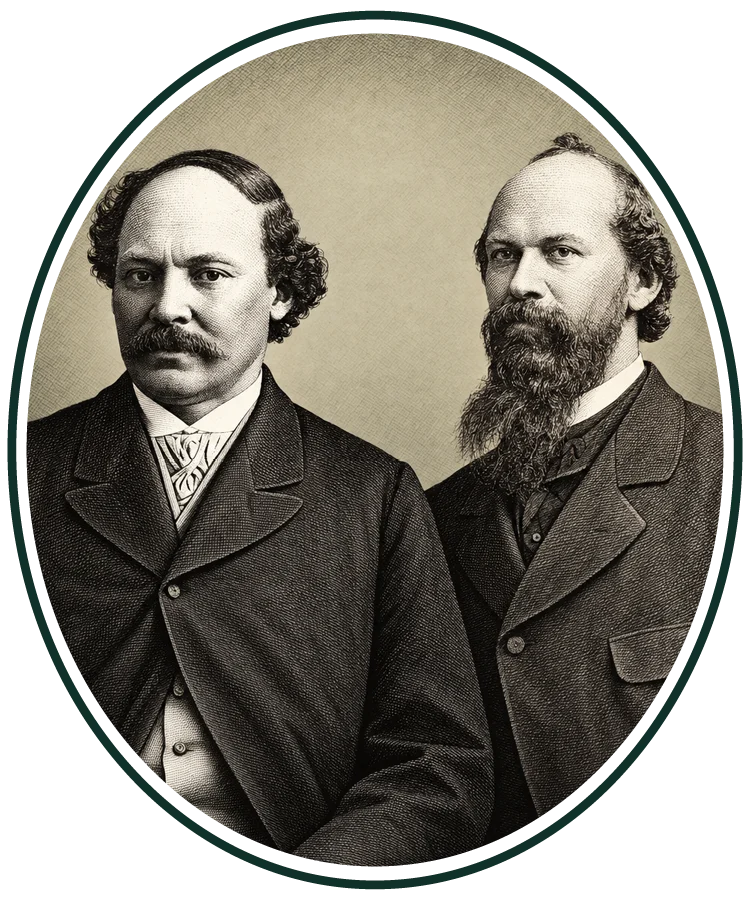
Robert Seldon Duncanson and James Presley Ball were pioneering Black artists whose work in Cincinnati connected creativity with the struggle for freedom. Through painting, photography, and a remarkable collaboration, they brought antislavery stories to audiences at home and abroad.
Born in New York in 1821, Duncanson spent much of his career in Cincinnati. He became a celebrated landscape painter, exhibiting widely and receiving commissions from prominent Cincinnatians, including abolitionist Nicholas Longworth.
Ball, born in Virginia in 1825, built a successful photography studio in Cincinnati. A photographer, businessman, and outspoken abolitionist, he photographed prominent antislavery figures, including Frederick Douglass.
Their paths came together in a city where artistic opportunity existed alongside deep divisions over slavery.
Between approximately 1845 and 1855, Ball and Duncanson worked together. Ball hired Duncanson to hand-tint photographs, and Duncanson exhibited his paintings in Ball’s studio.
Their collaboration connected different ways of seeing and recording the world. Ball’s photography captured people and their presence. Duncanson’s paintings explored landscapes, including the Ohio River and Ohio Valley.
Scholars continue to examine how Duncanson’s abolitionist beliefs appeared in his work. His 1853 painting Uncle Tom and Little Eva, for example, is believed to carry antislavery commentary.
Their collaboration extended to an ambitious antislavery panorama: an approximately 1,800-foot-long artwork featuring fifty-three scenes.
The work depicted the African slave trade and enslavement in America alongside resistance movements and the cultural richness of West Africa. Presented with a narrative description, it toured the United States and Europe, urging audiences to take action.
Although the panorama has not survived, its story reveals the scale of their ambition. Together, Ball and Duncanson used creativity, imagination, and entrepreneurship to confront injustice and express the possibilities of freedom.