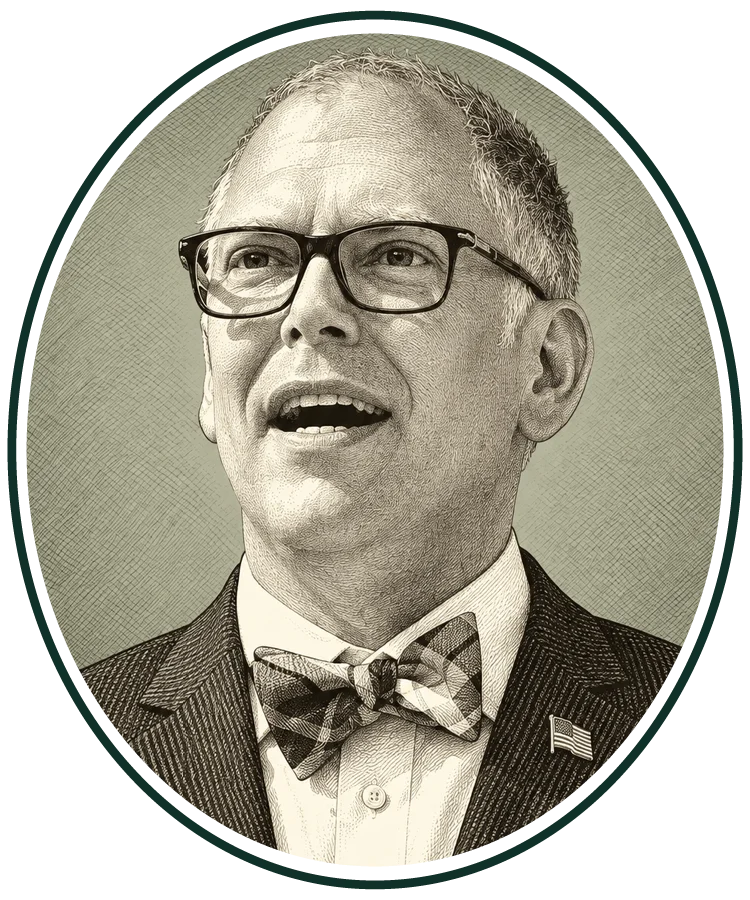
His love story changed American law.
Jim Obergefell’s fight to have his marriage recognized became part of a landmark moment in LGBTQ+ civil rights. The Cincinnati resident was the lead plaintiff in Obergefell v. Hodges, the 2015 Supreme Court case that established marriage equality nationwide.
Born in Sandusky, Ohio, Obergefell graduated from the University of Cincinnati in 1990. He and his partner, John Arthur, built their life together in Cincinnati.
In 2011, Arthur was diagnosed with amyotrophic lateral sclerosis, or ALS. As his illness progressed, the couple decided to marry.
In 2013, they traveled by medical plane to Maryland, where same-sex marriage was legal. Obergefell’s aunt performed their wedding ceremony on the airport tarmac.
Although they were legally married in Maryland, Ohio did not recognize their marriage.
The couple sought recognition so that Obergefell could be listed as Arthur’s surviving spouse on his death certificate. What began as a deeply personal effort to protect their relationship became part of a broader legal challenge.
After Arthur’s death, Obergefell continued the fight. The dispute eventually reached the United States Supreme Court.
In June 2015, the Supreme Court ruled that same-sex couples have a constitutional right to marry and to have their marriages recognized by the states.
Obergefell’s advocacy extended beyond the case. He founded Equality Vines, a wine label supporting civil-rights organizations, and continued speaking publicly about LGBTQ+ equality.
His work has earned recognition from the National Underground Railroad Freedom Center, Cincinnati, and the ACLU. To mark ten years of marriage equality, Cincinnati unveiled Fountain of Love, an Over-the-Rhine mural honoring his activism.
His story connects a couple’s commitment to one another with a change that affected families across the country.