Putting Through the Years

1836

James G. Birney

He put abolition in print.

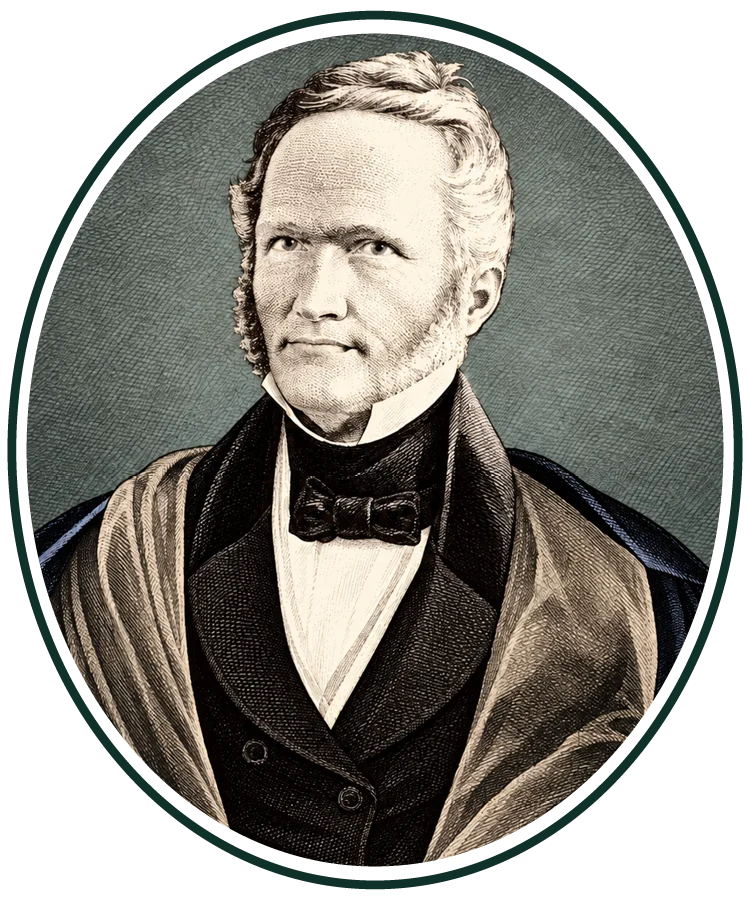
James Gillespie Birney was a lawyer, newspaper editor, and abolitionist whose Cincinnati years helped shape the antislavery movement. Through the printed word and political action, he challenged slavery in a city deeply divided over freedom.

A Change in Conviction

Born in Danville, Kentucky, in 1792, Birney came to abolition through a complicated personal journey. He had enslaved people himself, even as he questioned the morality of the institution.

Over time, he rejected gradual approaches to emancipation and committed himself to immediate abolition. That change meant confronting a system in which he had personally participated.

Threats against his antislavery work in Kentucky brought him to Cincinnati, where he became involved with the Ohio Antislavery Society.

Printing in the Face of Opposition

In 1836, Birney began publishing The Philanthropist, an antislavery newspaper that became an influential abolitionist voice in the West.

Publishing those views in Cincinnati carried real danger. The city was deeply divided over slavery, and his newspaper office was repeatedly attacked and looted.

Birney continued his work despite that opposition. His newspaper helped make Cincinnati a center of antislavery debate and organizing, bringing the fight over freedom into public discussion.

Taking the Fight to the Ballot

Birney believed that ending slavery required political action as well as persuasion. He became associated with the Liberty Party and ran for president on an antislavery platform in 1840 and again in 1844.

His campaigns helped establish abolition as an issue that belonged in electoral politics. After leaving Cincinnati, he continued his work nationally.

His papers, preserved by the Library of Congress, document that commitment. His Cincinnati story reveals both the resistance abolitionists faced and the role publishing could play in challenging injustice.

MEET THE LEGENDS. PLAY THE COURSE.